
A Sermon for Jerusalem Day
This is an excerpt of a sermon preached by Elizabeth Raymer at Church of the Holy Trinity, Guildwood, ON on Jerusalem Day, May 17, 2026. It includes her reflections on attending the conference: “Palestine, Settler Colonialism and an Ecumenical Call to Action”
Today is Jerusalem Sunday — a day when churches around the world are invited not simply to remember Jerusalem as an idea or distant holy place, but to hold its people, its suffering, its beauty, and its hope before God in prayer.
The Psalmist writes:“Pray for the peace of Jerusalem; may they prosper that love thee.” Psalm 122:6.
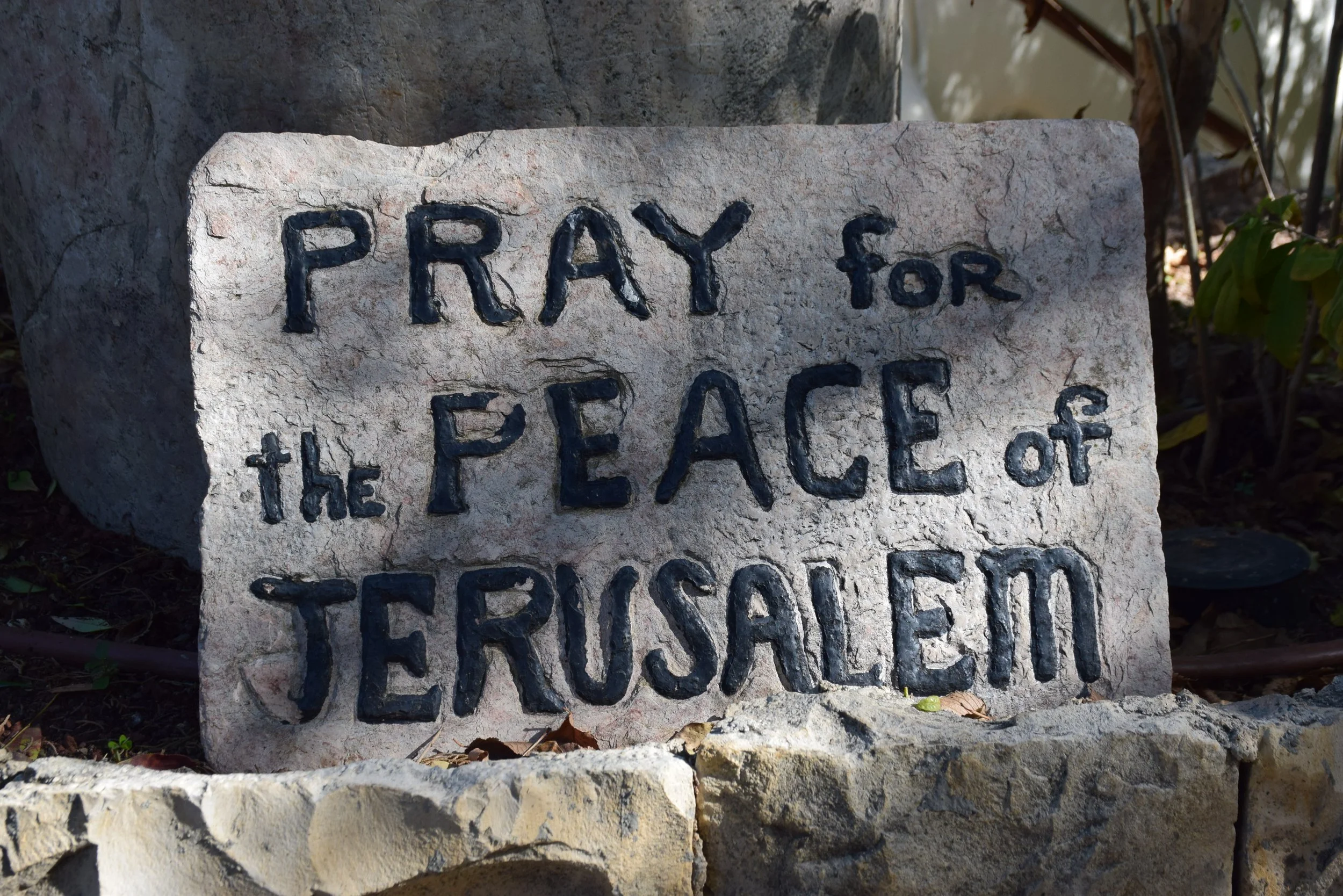
In Arabic, the word for peace is salaam. In Hebrew, it is shalom.
These words mean far more than the absence of war. They speak of wholeness, justice, dignity, safety, and human flourishing — the ability of people to live fully in the image of God, and for their lives to be recognized as equal in the eyes of God.
So when we pray for the peace of Jerusalem, we are not praying for a fragile quiet built on fear, domination, or silence, but for a just peace — for Palestinians, and for all who call the Holy Land home.
And we pray at a terrible time.
We pray while Gaza lies devastated after more than two and a half years of war and ethnic cleansing.
We pray while Palestinians in Gaza and the West Bank endure bombardment, displacement, hunger, checkpoints, imprisonment, settler attacks, fear, and profound uncertainty.
We pray amid anger, trauma, and despair.
It can feel overwhelming to speak into such suffering. And yet Christians are not called away from places of pain, but rather into them.
Over these past few days, I attended an ecumenical conference called “Palestine, Settler Colonialism and an Ecumenical Call to Action,” which was organized and attended by some of fellow pilgrims from a 2024 solidarity pilgrimage and held in Winnipeg.
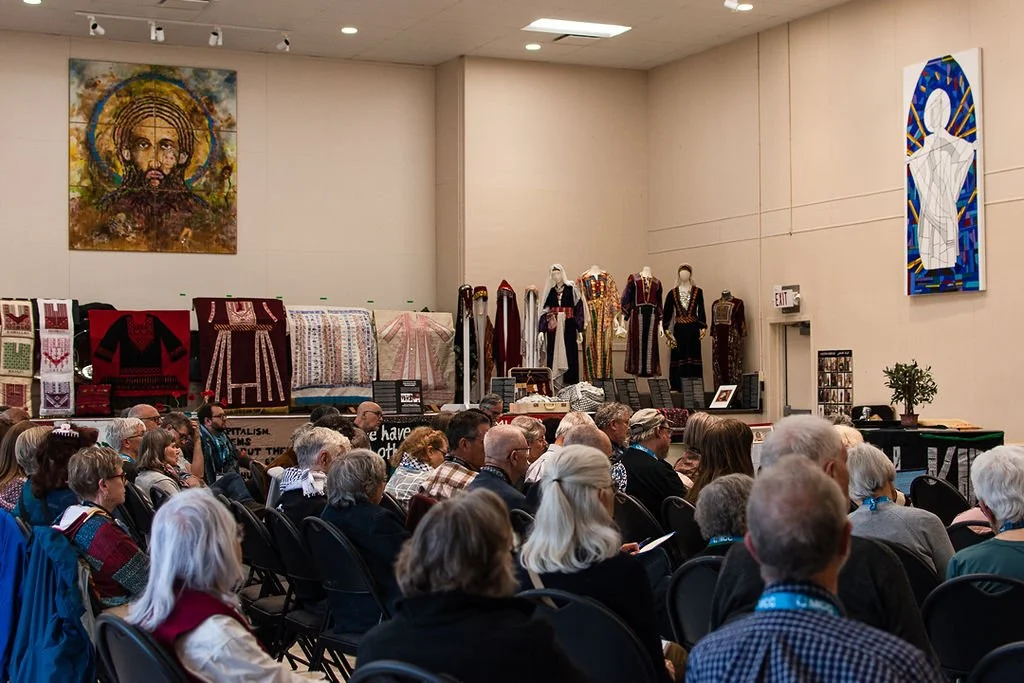
Photo by Gwendolyn H Friesen
There, Palestinian theologians John and Samuel Munayer reflected on another word that is often misunderstood: martyrdom. (View a recording of their presentation here.)
They reminded us that in the Christian tradition, martyrdom fundamentally means witness, from the Greek word martys.
As John Munayer said: “Being a disciple of Christ is all about bearing witness. The call to follow Christ has never been a call to comfort; it has always been a call to witness.”
He added: “Being killed is the last stage of a martyr’s journey; the witness begins much earlier.” (Jesus, of course, was a martyr. And we remember again St. George the Martyr, who was executed on the orders of the Roman emperor Diocletian after refusing to renounce his Christian faith during the empire's final, most severe persecution of Christians.)
During the conference one phrase returned: “We bear witness. We do not look away.”
One of the great temptations in times of overwhelming violence can be numbness: to stop seeing, to retreat into abstraction, to protect ourselves emotionally by looking away.
But the Gospel does not permit us that luxury.
Jesus wept over Jerusalem, saying: “If you, even you, had only recognized on this day the things that make for peace.” Luke 19:42.
What makes for peace is not domination, vengeance, dehumanization, or collective punishment, but justice, mercy, truth, repentance, courage, and recognition of one another’s humanity.
Jerusalem Sunday asks something difficult of us.
It asks us not to look away.
It asks us to pray honestly, listen carefully, seek truth humbly, and stand in solidarity with those who suffer.
Solidarity is not hatred. Compassion for and support of Palestinians does not require hatred of Israelis or Jews, just as grief for Israeli victims does not require silence in the face of Palestinian suffering, death and oppression under decades of occupation.
Christ calls us beyond tribalism.
He calls us to become peacemakers — not peacekeepers of the status quo, but peacemakers willing to confront injustice with courage and love.
In the words of Scripture: “The light shines in the darkness, and the darkness did not overcome it.” John 1:5
That is the hope Christians carry into even the darkest places.
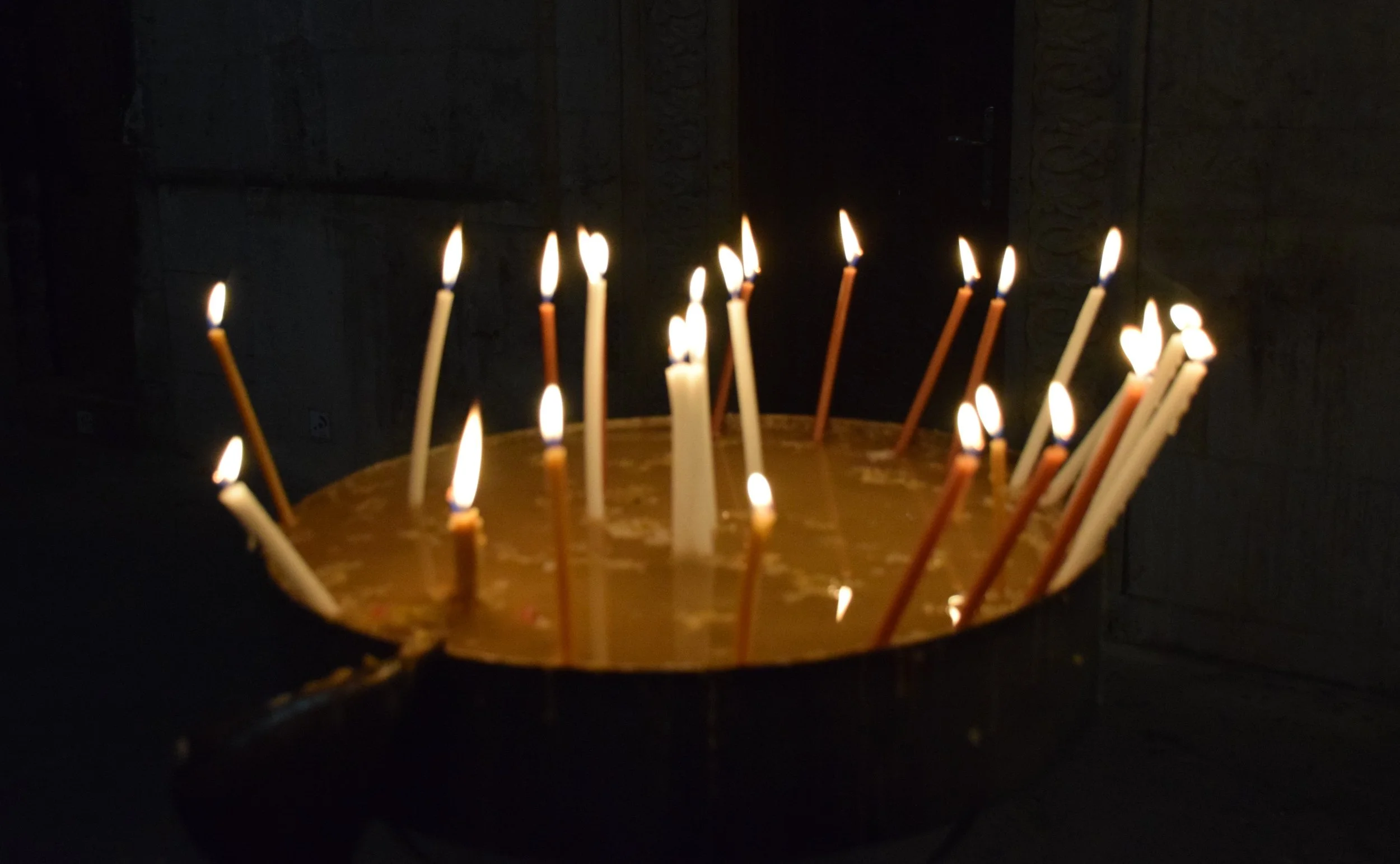
So today let us pray for the peace of Jerusalem.
Let us pray for Gaza, the West Bank, and all the Holy Land.
For the dead and the living.
For the grieving and the fearful.
For prisoners and their families.
For aid workers, journalists, clergy, and peacemakers.
For courage among political leaders.
And for comfort among the suffering.
And let us pray also for ourselves:
That our hearts not grow numb;
That we refuse cynicism, and complacency;
And that we become people of justice, mercy, and peace.
“Pray for the peace of Jerusalem; may they prosper that love thee.”
May God grant that peace and move all of us to witness and to service, too.
Amen.